These daisies started blooming last week. Just in time for the beginning of June.
The warmer temperatures are definitely here to stay. After reviewing the almanac for the entire month of June, it appears that it is a wonderful time to share with y’all all of the information for you to get growing this Month in June. No, it’s not too late to plant! We still have plenty of warm days ahead to begin seeds, and enjoy flowers all summer long.
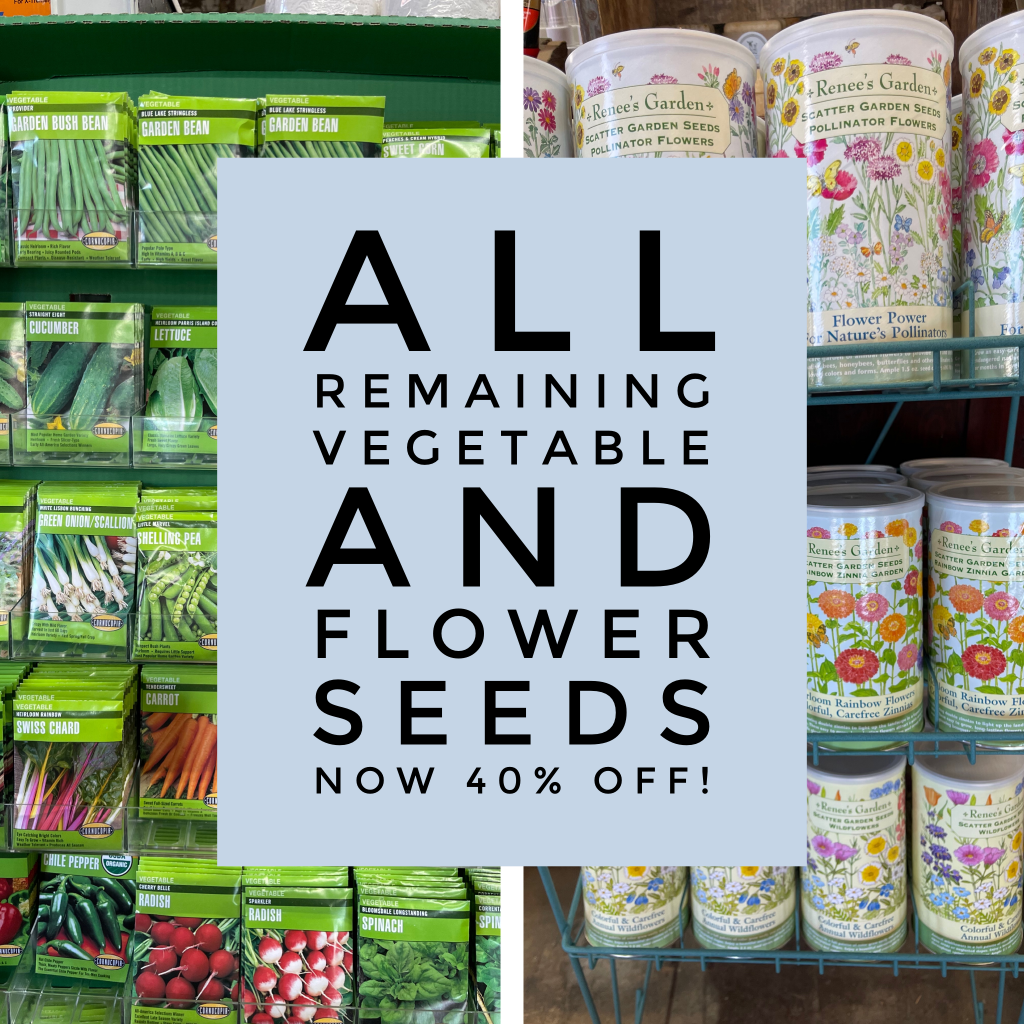
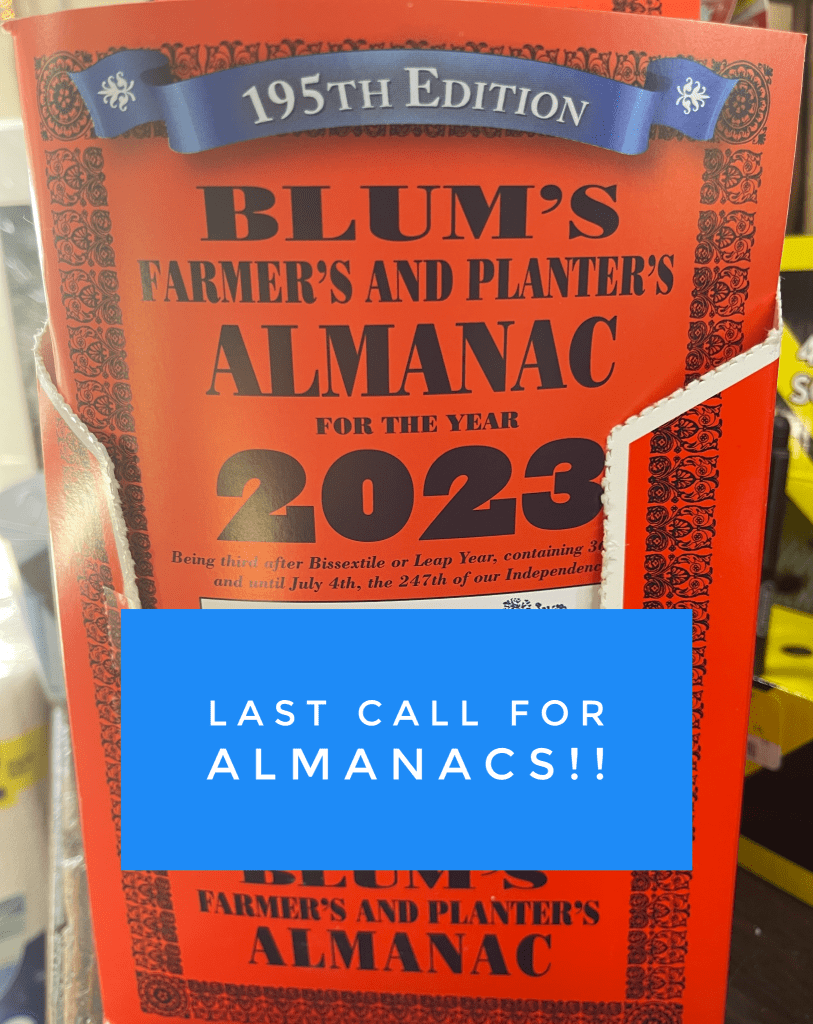
Stop by and pick up a few more seeds! We have a small bundle of these gardening guides left. Stop by to pick one up soon!
June Gardening Guide
June 1-2 Planting DaysJune 3-4 : Harvest Days These lettuce seeds were planted in May and almost ready to harvest! June 5-6 : Plant root crops, prune to encourage growth June 7-8: Destroy weeds, and harvest crops . Wilkes County Hardware has a wide selection of weed control products… sprays and concentrate. June 9-10: plant, transplant, prune to encourage growth, apply organic fertilizer. Black Wonder composting soil now back in stock!
June 11-12: Harvest crops
June 13-14 : plant, transplant, prune to encourage growth
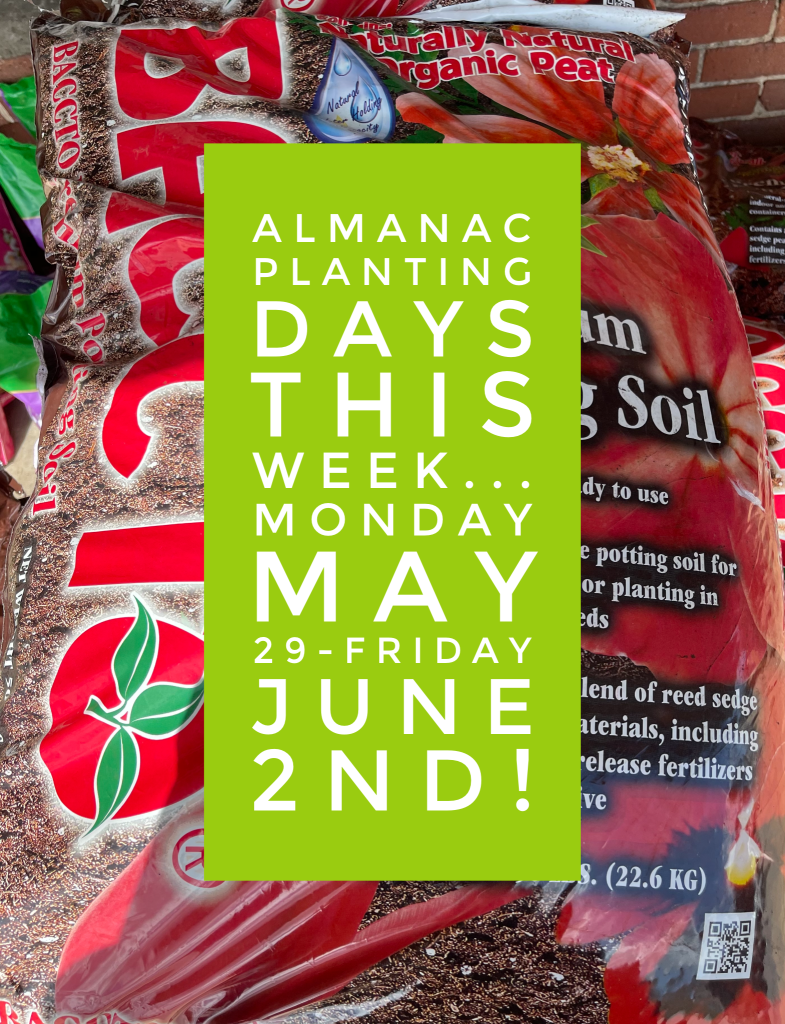
WCH Recommends: Baccto potting soil
June 15-17: destroy weeds, harvest crops
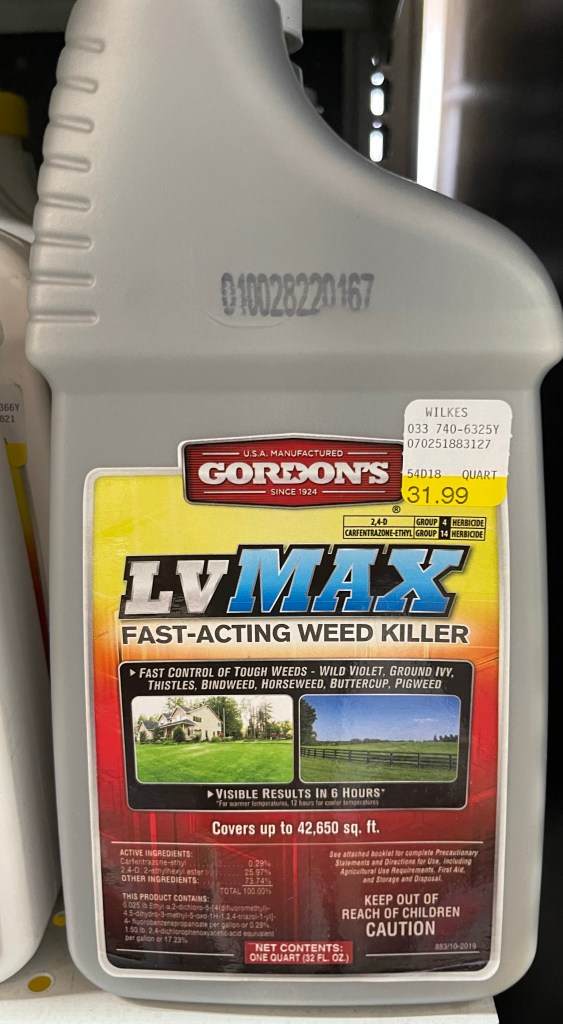
WCH Recommends: A 2-4D concentrate will not harm your grass but targets the existing weeds.
June 18-19: plant, transplant, seed beds, prune to encourage growth, apply chemical fertilizer
By mid June your garden should be in full bloom!
June 20-24: Barren signs means a great time to do weed control. Never plant during a barren sign… slow to no growth. Never trim bushes or trees during a barren sign.
June 21st Marks the first day of Summer!
June 25-29: planting days resume. June 28-29 are good days to seed beds, apply chemical fertilizer.
June is a good time to address any emerging issues that you might have with your roses. Be proactive, and shop early to prevent any damage.
June 30th: Prune to discourage growth
No matter what you grow this year… flowers, vegetables or maybe both… just enjoy your surroundings. Happy Planting!
Have you noticed that the grass is greener and the trees are lush with leaves?? The May flowers are emerging with blooms and the bees are busy gathering pollen. The hum of spring is underway.
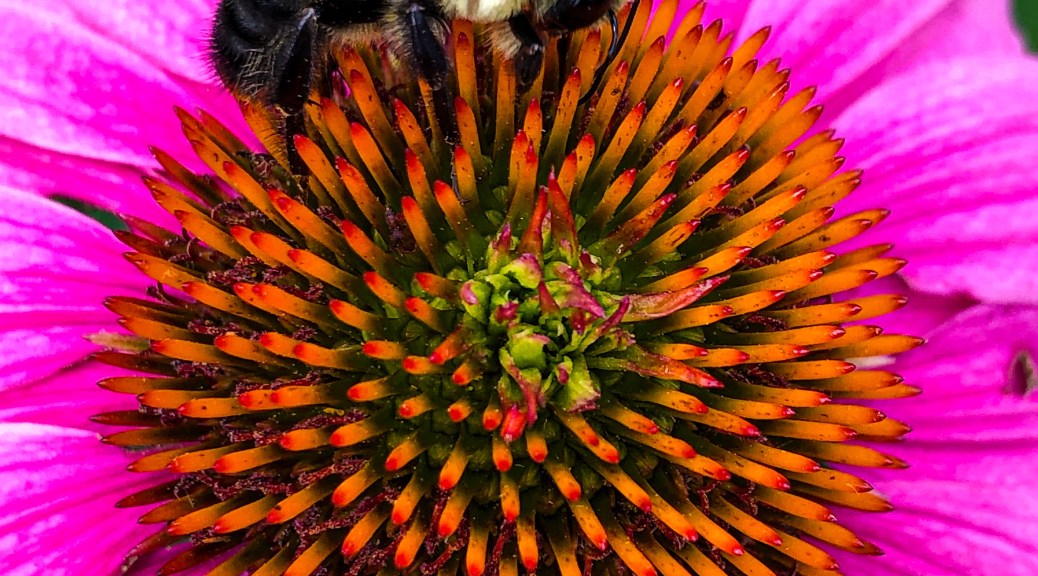
The birds, bees and hummingbirds are humming the sounds of spring and summer.
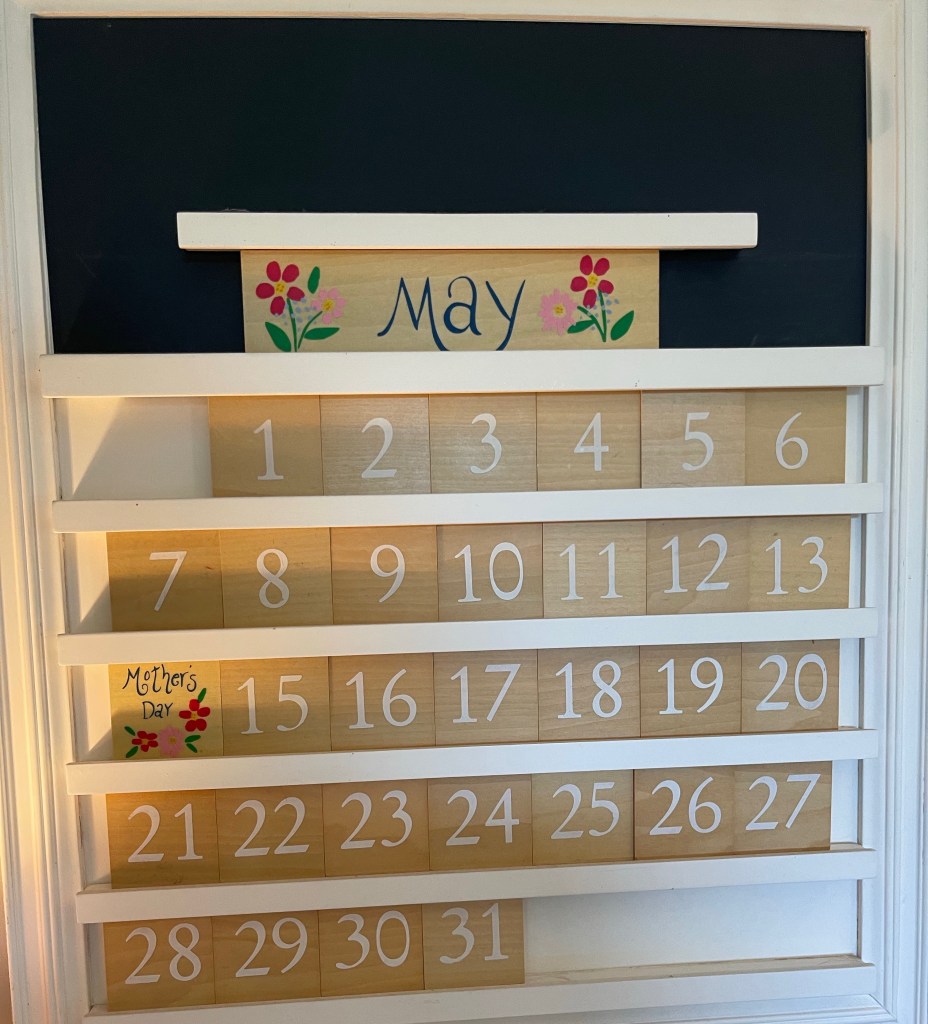
Which leads me to my next question… Are y’all ready for hummingbird season? Here in North Carolina our season officially begins each year around Late March – mid April. Yes, Put your hummingbird feeder out around tax season- April 15th as they are warm season birds. If you looked at your calendar lately, it is already May😳.
Have you spotted any hummingbirds yet near your feeder??? Do you have your feeder out???
If you haven’t prepared for your tiny visitors yet, you can visit us at Wilkes County Hardware for a great hummingbird season. Did you know that hummingbirds tend to return to the same areas as the previous year? Hummingbirds are migratory birds & they will be eager to find a full feeder. Hummingbirds will return to the same source of food each and every year, if it is readily available. Be ready with a full feeder for your favorite little hummers.
What if you have never been successful in attracting hummingbirds to your garden??? Can you find success in 2023??? Yes!
Creating A Hummingbird Habitat: A Few Tips for a successful season
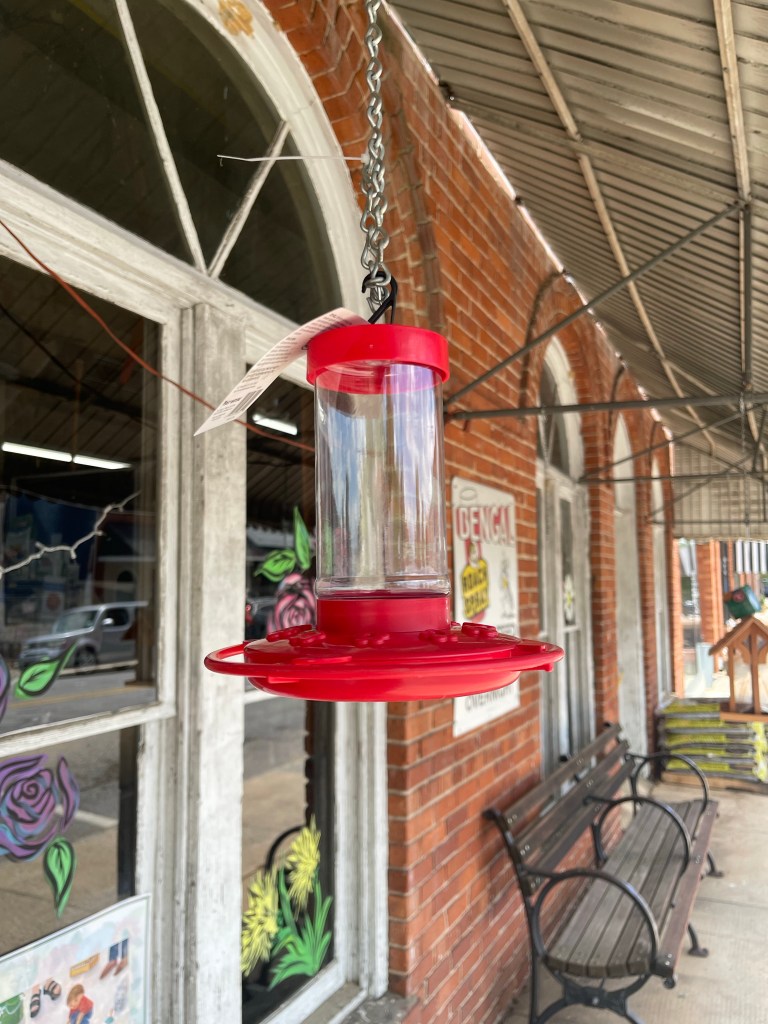
1. Hummingbird feeders ideally should be placed 15-20 feet from a window. Shrubs and trees nearby for resting areas for hummingbirds as they feed, and a have water source close by like a bird bath or a fountain.
2. Hummingbird Feeders should be cleaned out every few days as the temperature begins to warm up and feeder should not be placed into full sun.
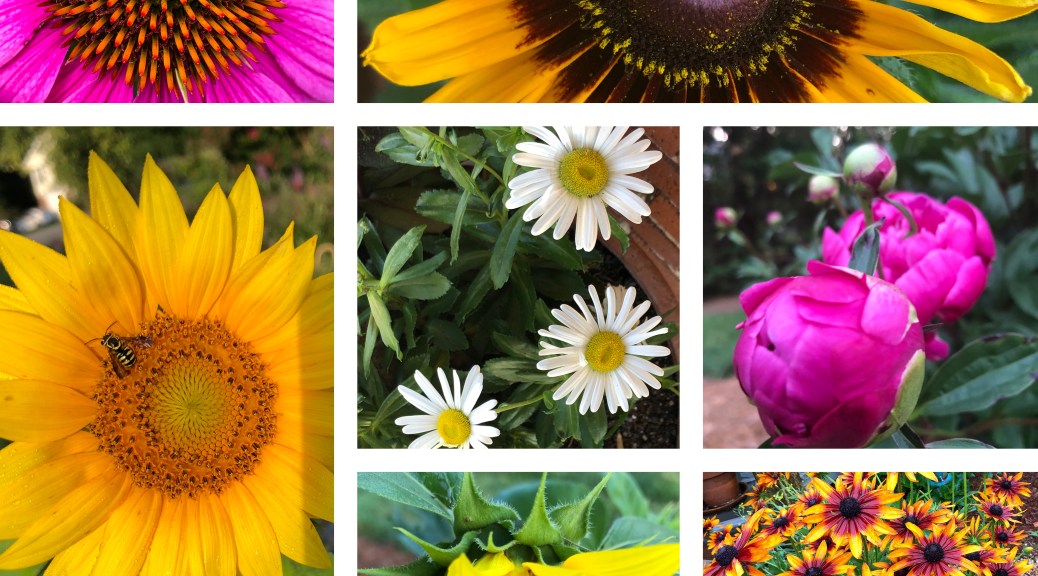
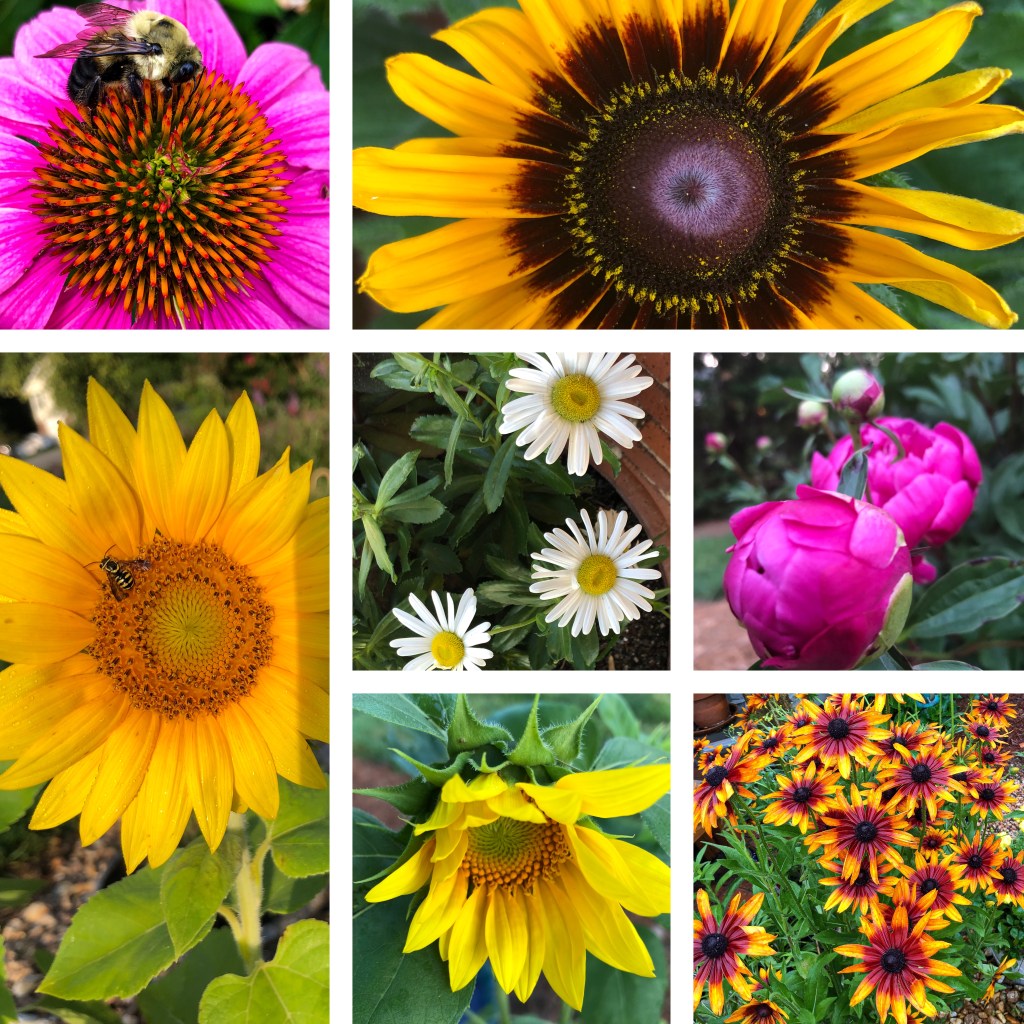
3. Hummingbirds will be attracted to all the beautiful colors in your yard/garden. Yes, you can plant certain flowers that will attract hummingbirds. Vines, certain perennials, and tubular flowers are welcome sources of nectar. This year is a great year to add those into your landscape. Our flower seed order is already in the hardware store. Stop by to purchase some new flower seeds soon. To add these lovely flowers into your lush garden landscape.
WCH Recommends: Morning Glory and Hummingbird Mix
4. Your Hummingbird feeder should be easily visible for your enjoyment and easy to spot by the hungry little hummingbird.
WCH Recommends: A Shepherd’s Hook to viewing your feeder easily
5. Be patient, it may take several weeks before you notice any little hummers at your feeder. Leave your feeder in place for a least two weeks before moving it to a different location.
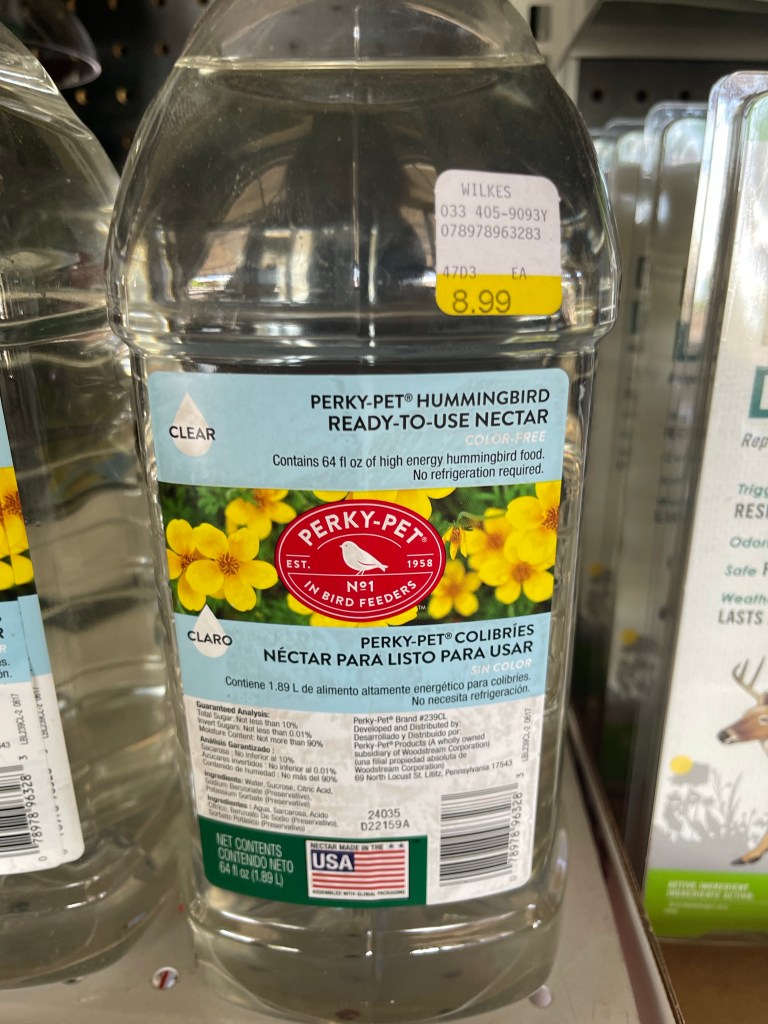
6.Lastly, use clear nectar in your feeder only. Yes, hummingbirds love the color red, but nectar is clear in its most natural form…the beautiful red, tubular flowers that hummingbirds love to feed from in nature. If you wish to attract more hummers, then go for a red hummingbird feeder and clear nectar.
The garden centers in May see a frenzy of activity. The Spring season has brought enough warmth and heat to keep those blooms beautiful. Do you find yourself buying the same annuals or planting the same flower seeds each year??? At the hardware store, our flower seeds are selling quickly as well as potting soil.
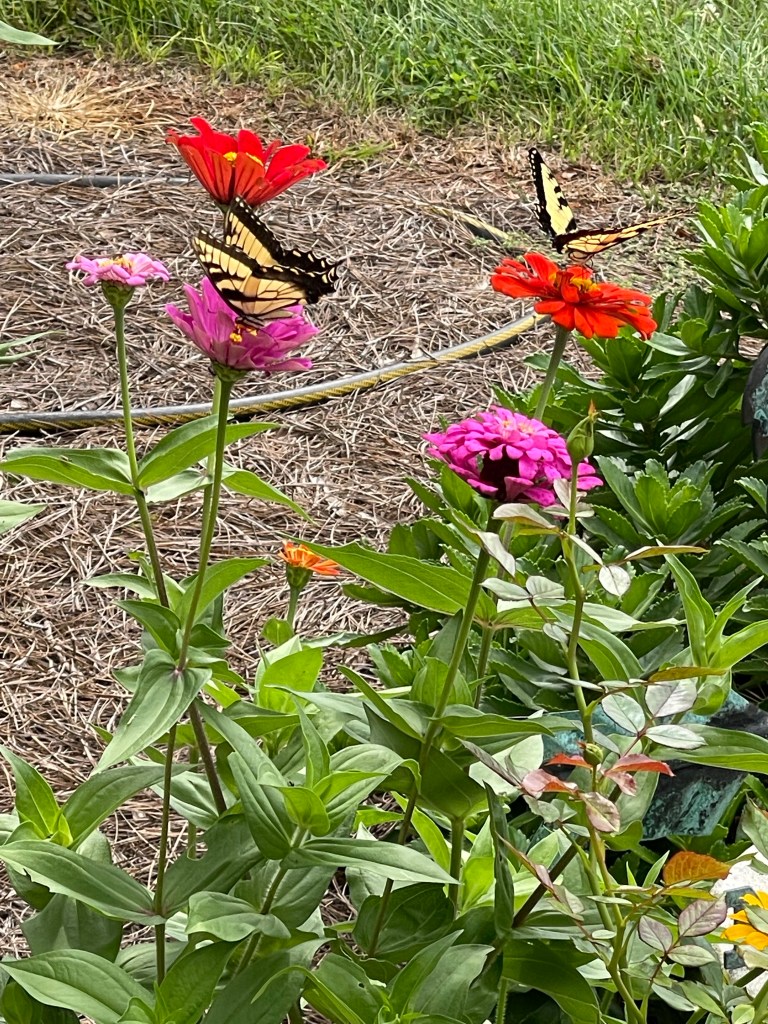
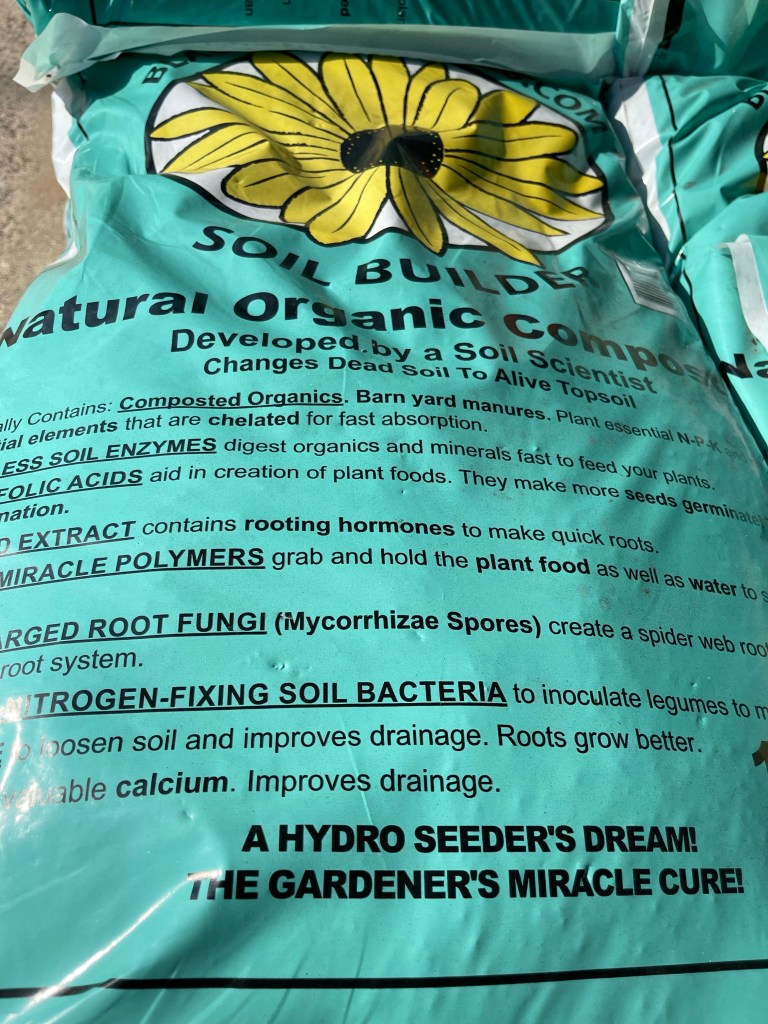
WCH Recommends: Using a composting soil builder along with a great potting soil mix creates a fantastic base for growing plants and flowers. WCH Recommends: Zinnias bloomed all summer long with butterflies abounding! Stop by to pick up some seeds now for blooms later this summer.
I began to think about this the other day, my personal connections to flowers and what I plant is deeply rooted… linked to my personal life experiences and memories of those who I love and those who are no longer with us.
Hydrangeas are a favorite flower memory. I have a large snowball hydrangea that I planted several years ago based around my childhood home. These beautiful blooms here are from my granny’s garden.
I have a few favorites that I love to plant each year. The striking colors, the scents, the aesthetics, and durability(long lasting nature) of the plant definitely impacts my purchasing decisions. But, many of the reasons why I pick the same type of flowers each year is due to my associated memories with these flowers.. past celebrations, or memories of strolling through family gardens.
Aunt Mary and Pat always had their window boxes full of red geraniums every year. I always try to have a couple of red geraniums each year.
If you and I did a walk through in my garden areas at my home, it would be a definite literal story of sharing plants.. who gave them to me to transplant, or maybe the why I chose the blooming beauty for my garden and the personal connection to each flower. My question to you today, do you relate and link flowers that you plant to your cherished loved ones too?
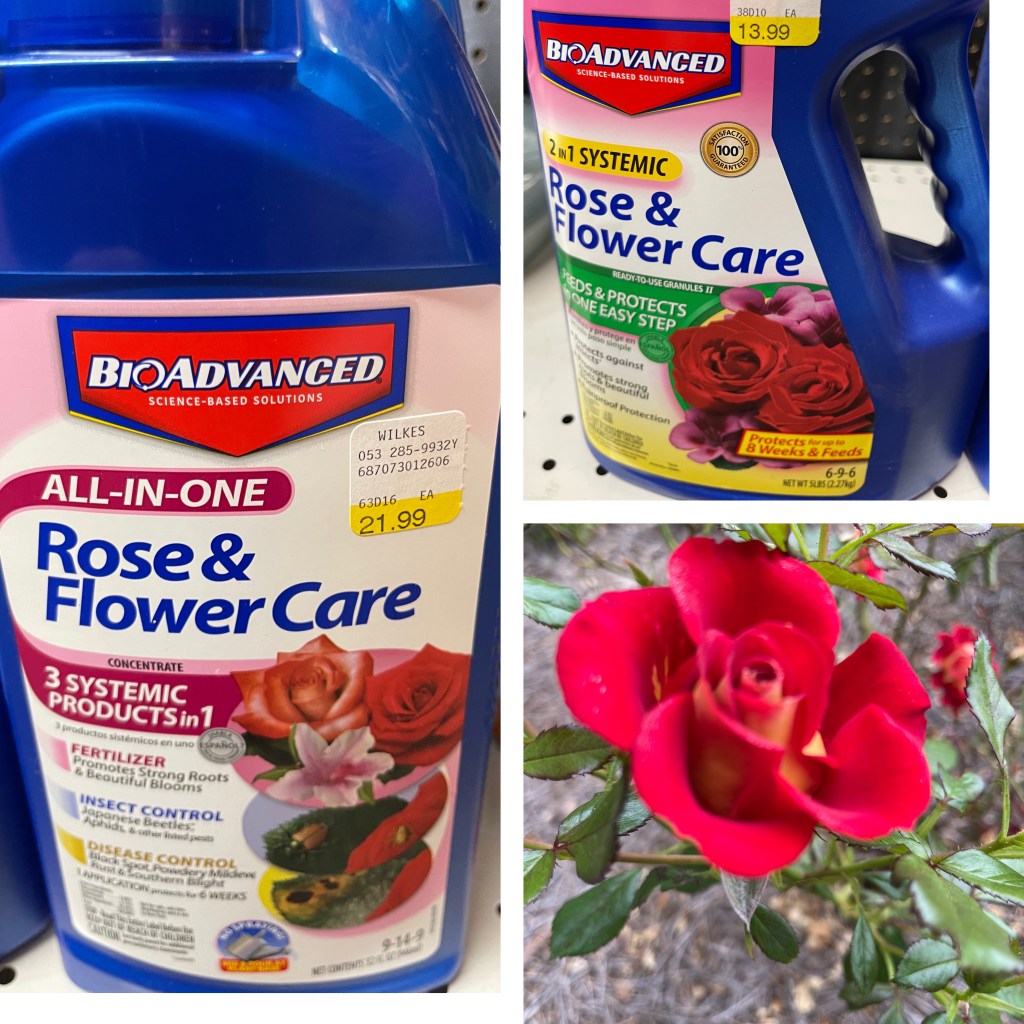
My mom always had beautiful roses at home. I love this ketchup/mustard variety in my front garden area. Many of the varieties I have chosen are as a result of our conversations about the care of rose, heartiness of the variety. WCH Recommends: If you have roses, this is a great product to use!
My final thought to share with you today, flowers hold power… not only the outward beauty for your home, hope, resilience to bloom even in difficult circumstances.., and cherished memories of those you love. Let’s get planting!
Living through a Southern Summer means consistently mowing the lawn is a necessity. I spent many summers on a riding mower going round and round until the yard was completely finished. Dad was usually busy completing the trimming around trees working the humming weed eater. Dad’s lawn always looked spectacular with the blades of grass all trimmed up, gleaming brightly in the warm summer sunshine.
Pool fun versus mowing the grass.. well there’s no debate on that one y’all 😂
The “art” mowing, or the phrase I’ll use today, “Mowology”, is not only your ability to keep up with mowing of the growing green grass AND the overall maintenance of the lawn. Let that sink in for a minute… that is a HUGE definition! Mowing & lawn maintenance requires a hunk of time on the homeowner part, just like that hunk of grass in your yard that has you currently stumped. You’re probably thinking to yourself… what on earth should I do next??? Weed control or pest control or should I just “kiss it up to heaven” and just let it go???
And we all know that keeping your lawn looking fabulous doesn’t come easily. It is hard work!!! Even as I write this, my dad still does ALL of his lawn maintenance. He just simply enjoys doing it. Dad would be in my book, “A Mowologist, at heart”. Why??? He is motivated to keep his lawn/yard looking great year round, he has the “heart” for an amazing lawn. Ultimately, don’t we all want that???
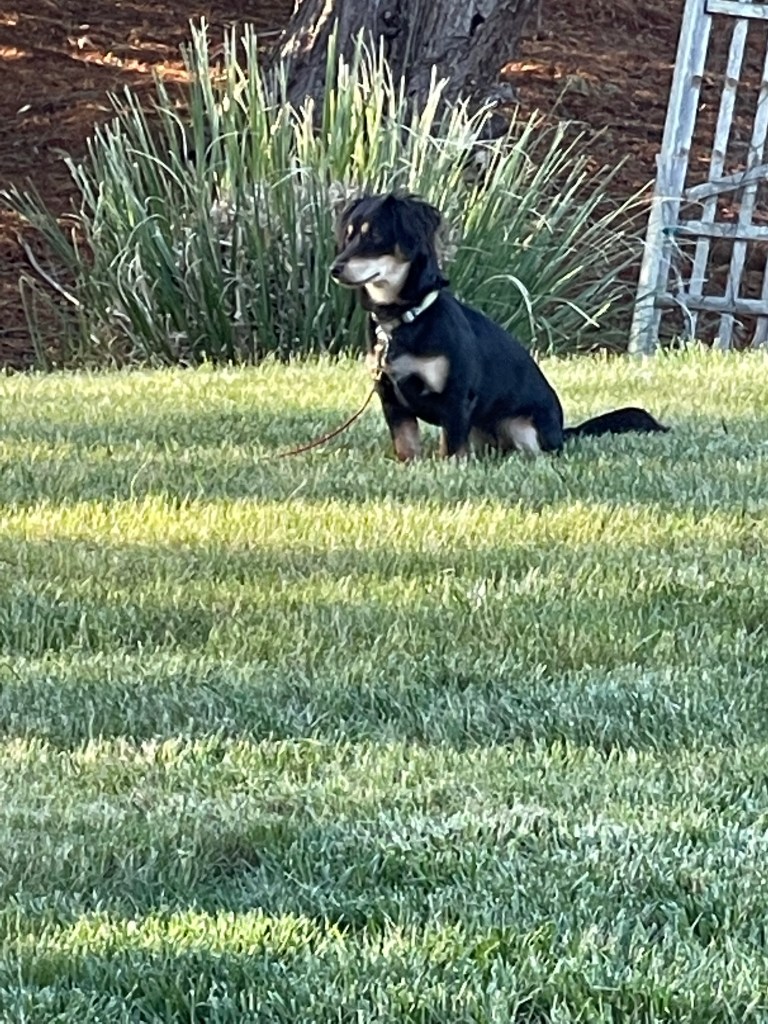
Cookie enjoys just sitting in the grass watching over her domain
Whether you are an active participant in your lawn care or not, it is good to know some basic details about what should be done and when, so your hard earned money is being utilized to the ultimate extent!
Put your hard earned money to use! Knowledge is powerful!
Now is an excellent time to walk your lawn to survey it to see how you wish to proceed for a beautiful lawn next spring… yes, y’all are reading that correctly.
Check the verbiage in the Almanac… it’s time to put emphasis on the lawn!
August and September are actually THE most important months for lawn care! For all of y’all who are excellent “mowologists” out there, be proactive and think ahead towards next spring. What should you be focusing on FIRST?? Continue to read below in order to find the BEST option available for your lawn this Fall.
The following information is a portion of my research based findings. Several of our customers have asked for help/questions in regards to lawn care for the Fall season. This is only a few helpful tips!
Option one: “The Ultimate Mowologist”…. I’ve got this lawn under control & I’m looking ahead to Fall Y’all:
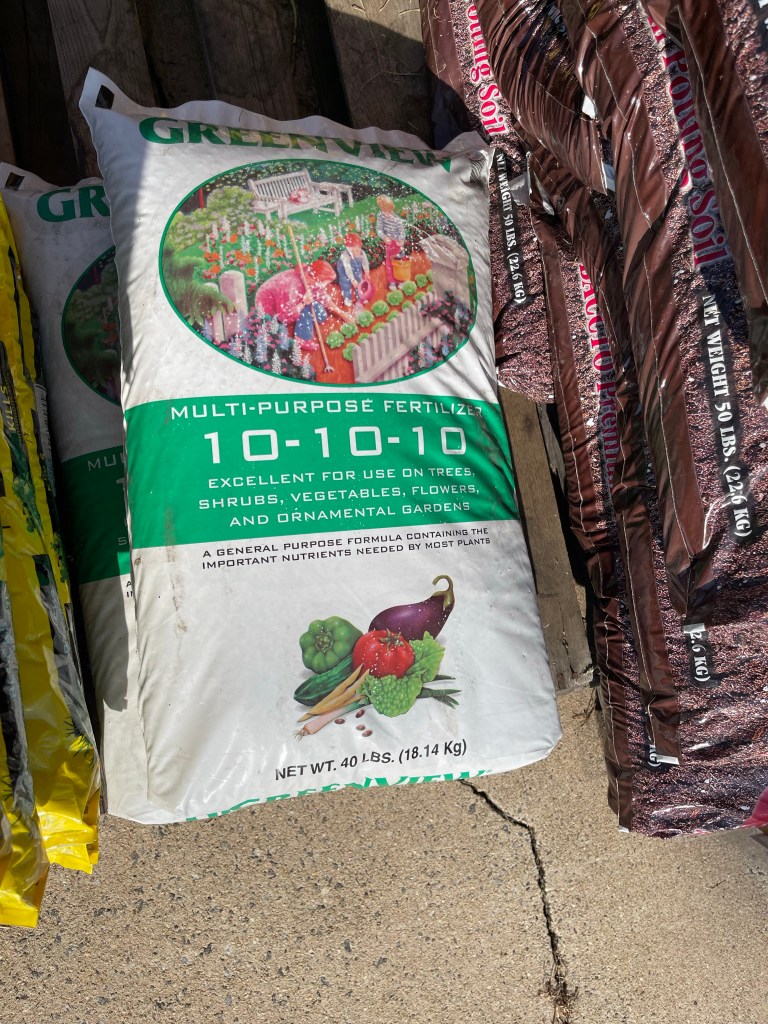
1. Apply Fertilizer. A little fertilization towards end of the brutal summer heat will give your lawn a boost going into Fall. Your lawn is tired and possibly even a little stressed. As a result, your lawn could use more nitrogen. Lawns that lack nitrogen may also be missing other two vital nutrients, such as phosphorus and potassium. Yes… y’all guessed it, these are the essential elements found in fertilizer.
This is a nitrogen rich product that would be an amazing additive to your lawn this Fall, sprinkle onto your lawn after aeration. We also have basic fertilizer options
2. If you are just simply unsure to fertilize or not??? Stop by and pick up a soil test. Your lawn will go dormant with or without fertilizer as temperatures begin to cool down. By adding a boost of fertilizer, you can have a much more lush, vibrant yard come springtime.
Soil test can take the guess work out of your lawn care
3. Aerate – It is time to aerate lawns that are subject to heavy traffic or grown on clay soils. Yes, that is definitely us!!! Clay soil in the NC Foothills are a definite standard. Soil plugs should be broken up and scatter these plugs back into the lawn for best results.
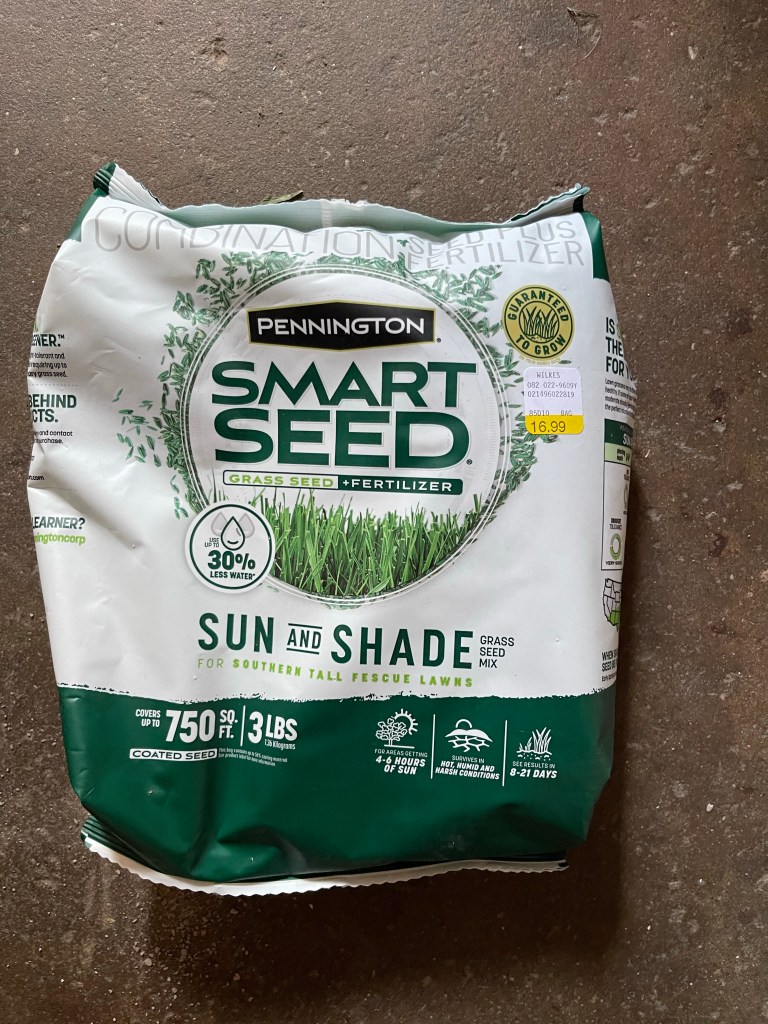
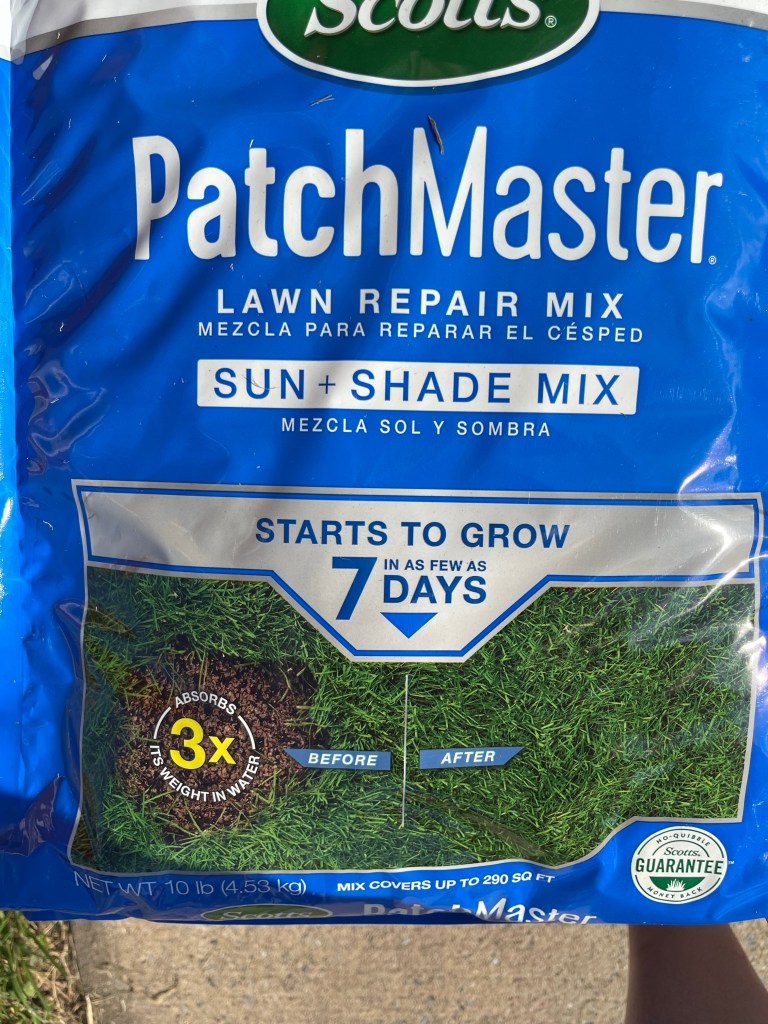
4. Do you wish to Overseed OR do you need to Seed small bare patches that have emerged in your lawn? Overseeding can reduce weeds in your lawn by simply pushing them out with the thick layer of green, lush grass. Why should you overseed or seed bare patches now??? There are a few distinct reasons that make fall the best time to plant grass seed. The Fall months of September & Early October are ideally the best seeding times when the soil is still warm. With the combination of warm soil, warm daytime temperatures, and cool evenings encourages seed germination and establishment of newly sown cool-season grass. In general terms, you should plant cool-season grass seed at least 45 days before the “estimated date” of your first fall frost. Meaning, before soil and air temperatures drop to less favorable levels. Fall will typically brings more rain, which lessens the chance that these newly planted grass seeds may dry out, and reducing the need for extra watering on your part.
Small bags of grass seed are also available!
Option Two: “The Tired Mowologist “…Summer has gotten the best of me y’all, but I’ve got this handled…
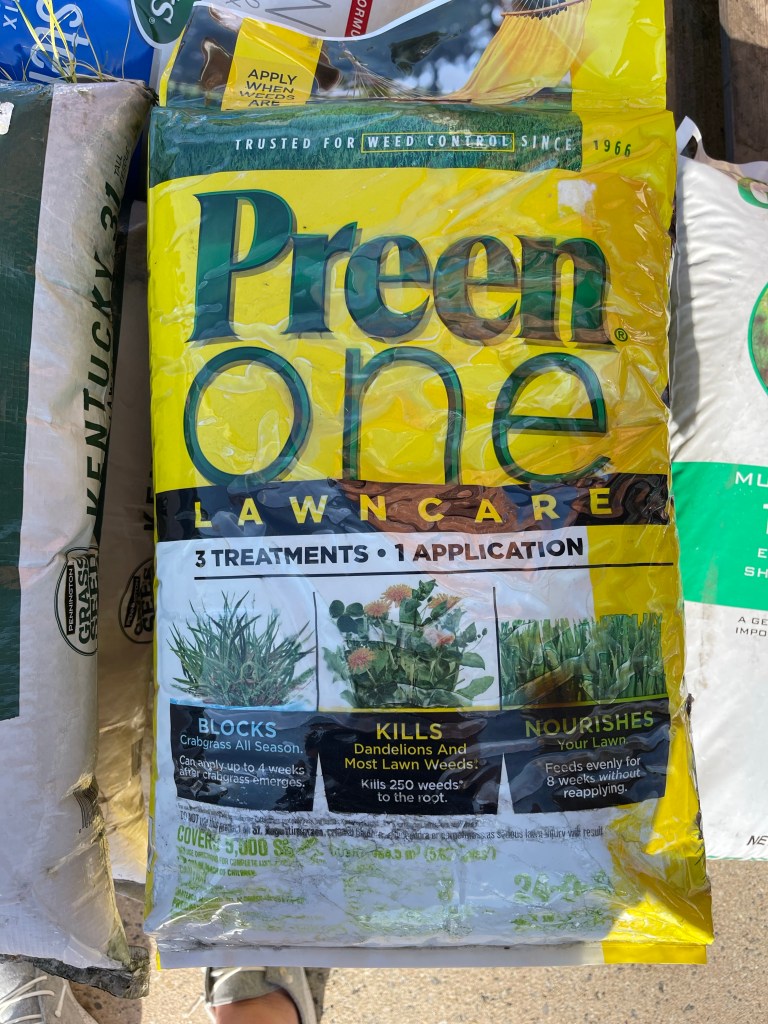
1. Weed control – As the summer wanes, weeds may have emerged in your lawn! Post-emergent herbicides are one way of removing weeds that have already sprouted if you can visibly see them in your lawn. Weed and Feed options are also available… stop by to see which one works best for you.
2. Insect control– did you notice Japanese beetles in your yard this season??? Mole issues ??? Believe it or not, these are all connected!!! Japanese beetles lay eggs in your lawn that turn into lawn grubs in late summer . The grubs eat and dig up your lawn roots in late summer, hibernate all winter long and then come back with a vengeance in spring…ready to destroy your lawn again. Moles eat grubs. Now is the time to get moving on grub control for your yard before the cooler weather sets in and the grubs move deeper into the ground, making it ineffective for any type of grub control to be impactful. Other signs of insects??? Stop by to see what would work best for your lawn and gardening needs this Fall.
If you purchased this product this summer, you might need to consider getting prepared for grub control 😳Pet friendly grub control Granular & concentrate available
Y’all might be wondering why did I give you two different choices ?? Here’s the answer. You should never fertilize, aerate, and seed the lawn at the same time as you are in the weed control cycle. It’s kinda like you are defeating your original purpose… Pick one area of focus and go with it! Option 2 with lawn weed control should be completed by Mid September. After three weeks of completion, you can come back to aerate & overseed/seed bare patches in your lawn if you deem it necessary this Fall.
Looking Ahead into Fall Y’all… “The Proactive Mowologists”
1. Water lawn as needed.
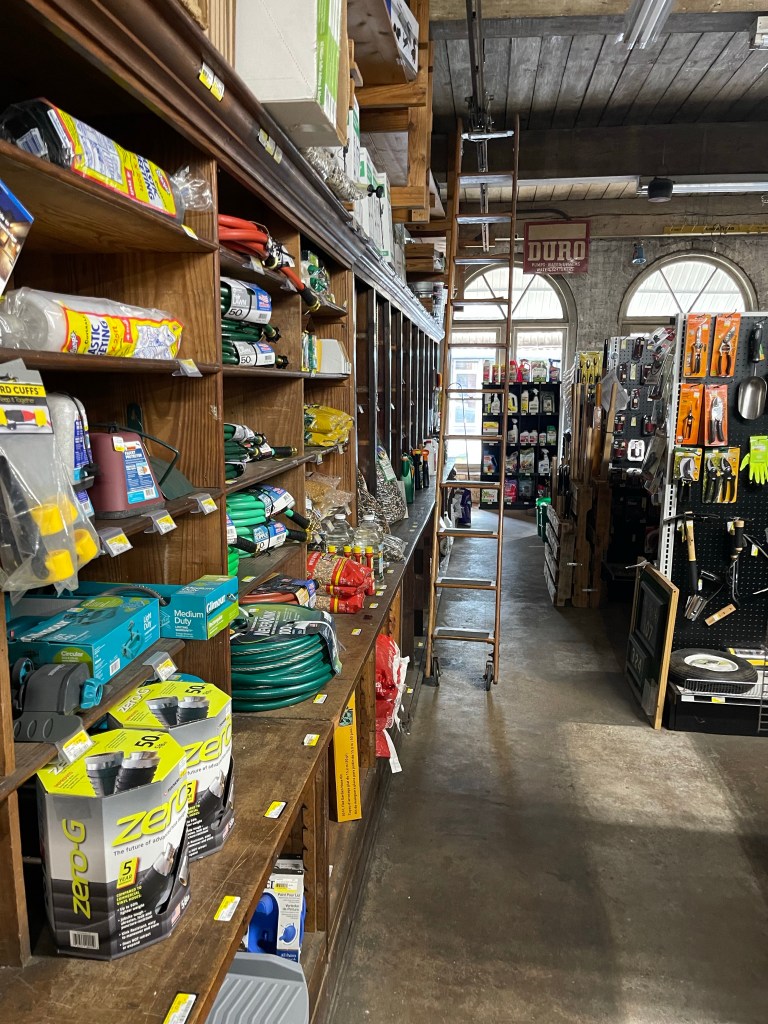
Need a new water hose???
2. Maintain your Mulch– a thick layer of mulch helps to prevent weeds.
3. Pull & spray weeds as needed
5. Fall is a great time to plant trees or shrubs.
6. Get ready to rake leaves!!! 🍂🍁🍁🍁
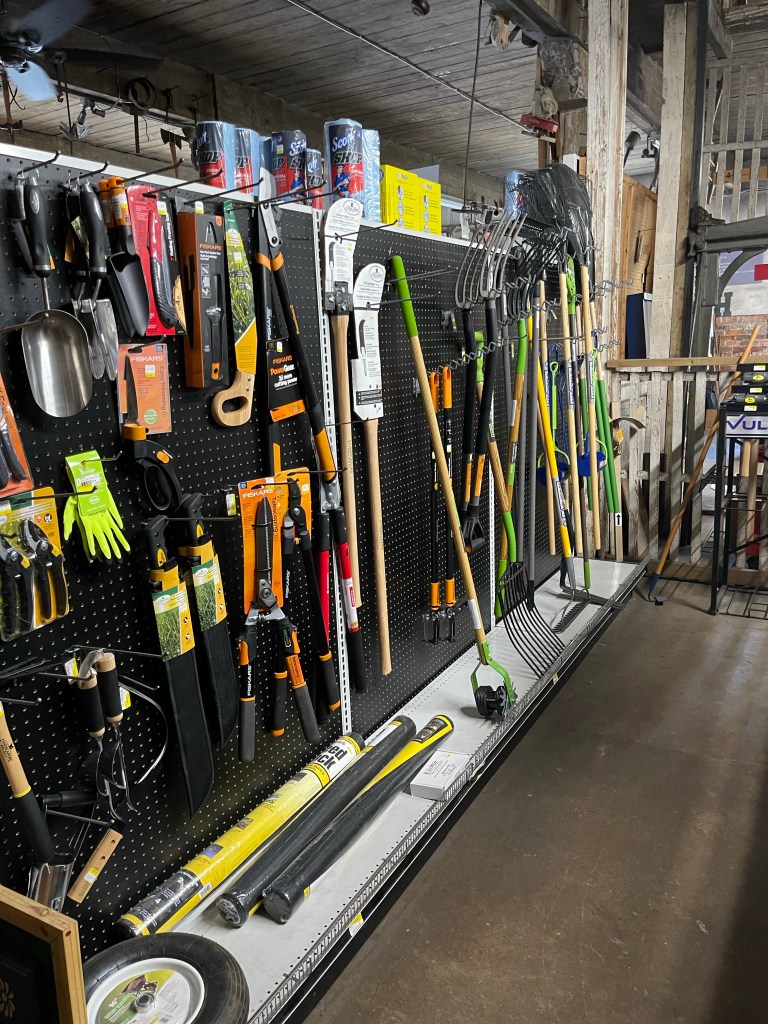
7. Check out your fall lawn & garden tools… are they in need of maintenance,cleaning, repair???? We can help with new handles, and sharpening.
8. Keep lawnmower blades sharpened. Dull blades mean uneven cutting in your lawn.
Fall is an amazing time of the year for the novice mowologist or even the pro who has been doing it well for years. The weather begins to cool down and the summer sweats subsides. What Mowologists isn’t looking forward to parking the mower in the garage for a few months of leisure as winter weather sets in and you get to trade it out for a snow shovel??? Right??? 😂
I really hadn’t thought much about Sonker since my teenage years but an early morning walk few weeks ago brought the word back into my vocabulary once again.
Our walking group had converged on the North Wilkesboro Greenway trail and we had begun talking about miscellaneous things, ie… who was doing what over the next few days… Summer fruits seemed to be on the agenda for discussion and the term Sonker came up… chiefly the origin of the term. One of my friends never had heard of the term and begun to ask questions about it and how it was similar or different from a fruit Cobbler.
My input into the conversation…Sonker was a common summer dessert in my home growing up and I also remembered my Granny used the term often. Cobbler wasn’t the commonly used term to describe the fruit-filled pan of goodness at our house nor in my extended family households.
Sonker can be made with any type of fruit. We often had fresh blueberries or cherries at home during the summer months.
As we continued our walk and daily topics of discussion changed, I made a mental note to ask my mom about the Sonker recipe later and if she knew anything about the origin of the name.
A week or so elapsed in time before I recalled the Sonker conversation on the Greenway when I was talking on the phone with my mom one afternoon. She immediately answered my questions. She recalled an article that she had read in Our State Magazine about Sonker. She relayed key details from the article, and encouraged me to go read more about it. Mom discussed the differences between her version of Sonker and Granny’s. Granny usually had leftover fresh biscuit dough which she topped with fruit. Mom’s recipe, y’all will be able to find at the end of the blog post today.
Granny would take her leftover scraps of biscuit dough to top her Sonker.
FYI, Mom is fantastic with last minute supper guests…she can whip up an easy dessert effortlessly. My sister & I often challenged her to this task, with extra guests at the table. Sonker was one of those perfect, easy desserts… baking and bubbling in the oven while supper was being served and consumed. The aroma filled the kitchen with dessert goodness waiting patiently for the final feature, a fruit-filled Sonker.
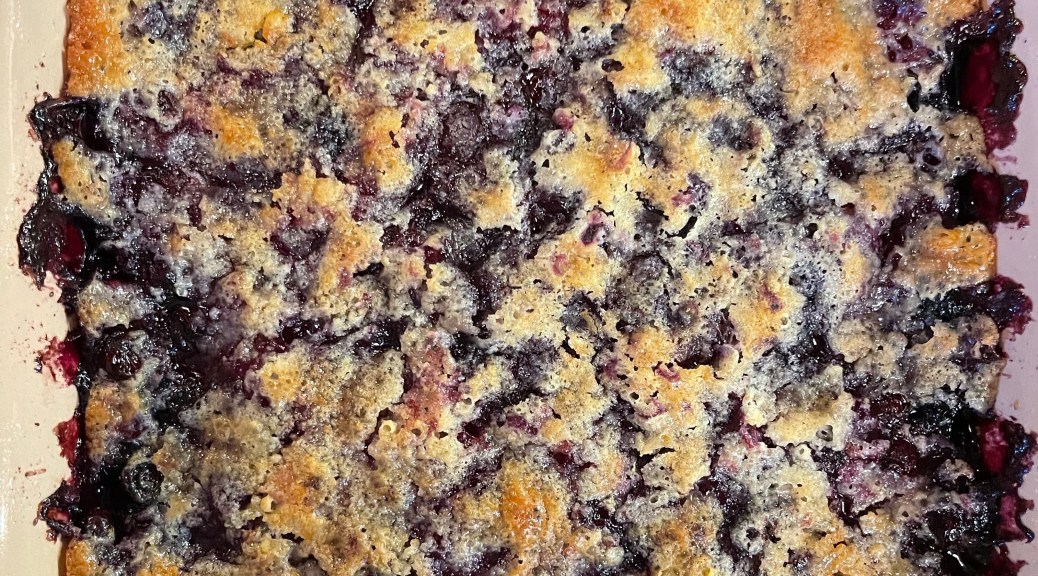
Blueberry Summer Sonker
For those of y’all who are still wondering what on earth is Sonker??? Sonker is a deep-dish fruit “pie”, usually served in a square/rectangular baking pan. Sonker is supposed to be “juicier” than a typical cobbler. Sonker can be a dessert large enough to feed a family or accommodate guests in your home. Sonker is NOT a “fussy” dessert. The ease of recipe is part of the charm of Sonker. On the other hand, cobblers, tend to have more of a thick biscuit texture to the breading and the texture on top appears to be “cobbled”. The dough is dropped or spooned onto the top of the fruit typically in a cobbler. The end result of a well baked Sonker, in my opinion, showcases your fruit, cobblers often showcase the beautiful breading.
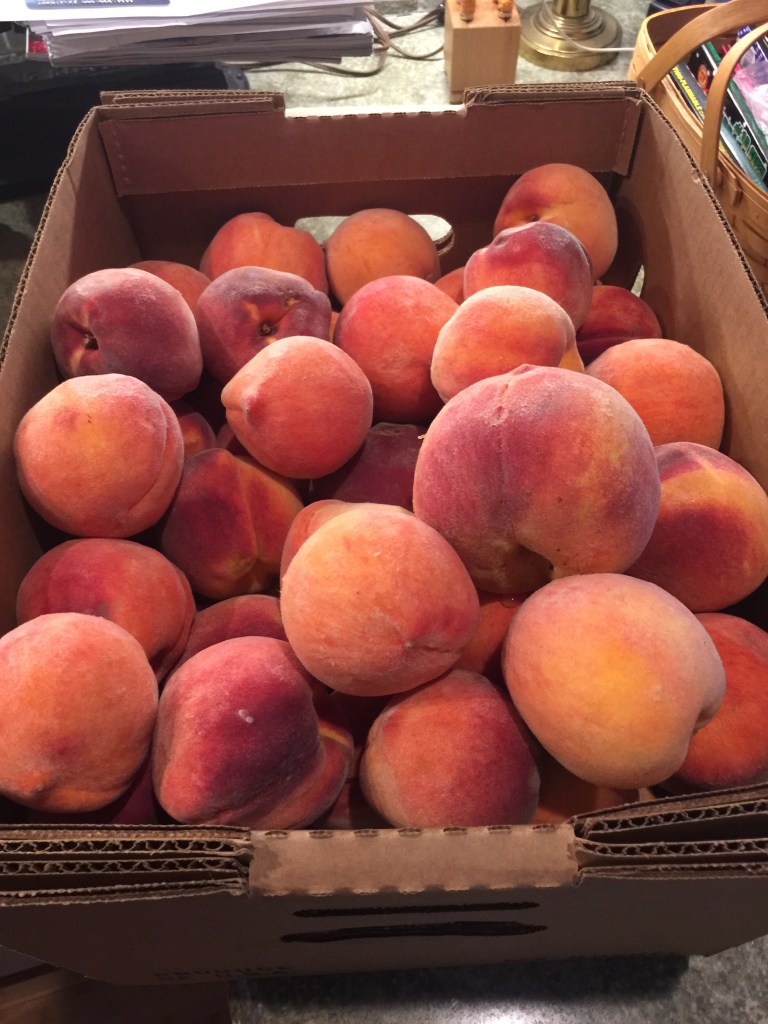
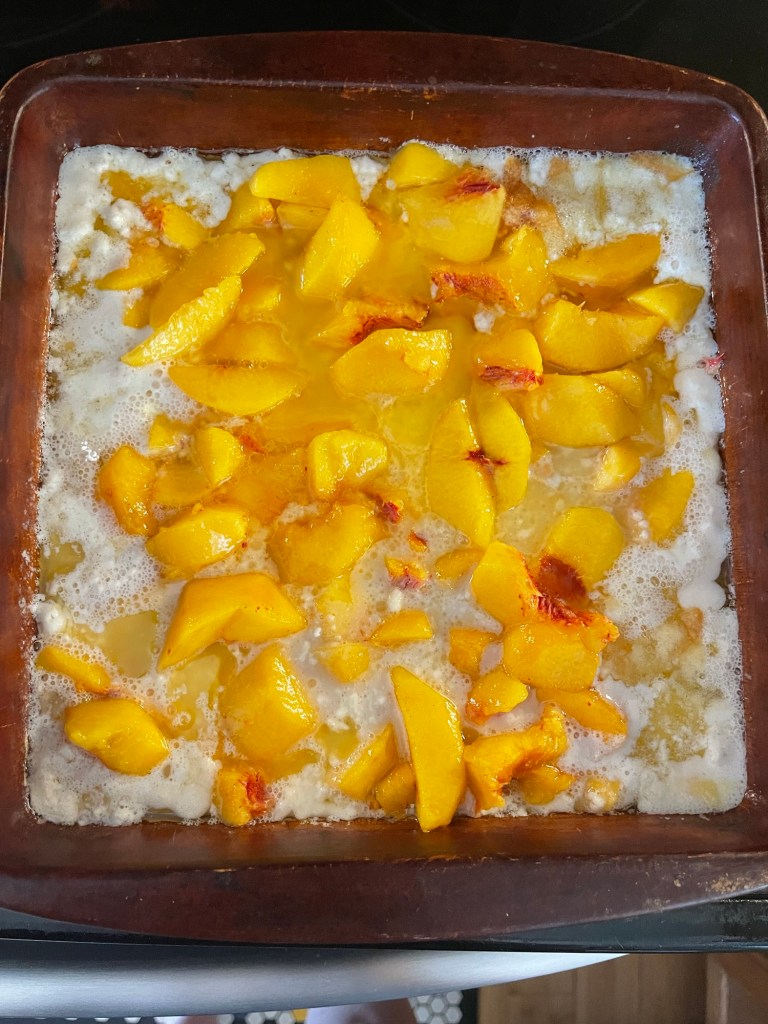
Have an abundance of fruit??? Make a Sonker and freeze the rest of your fruit for a special Sonker treat for later on in the winter monthsPeach 🍑 Sonker ready to go into oven
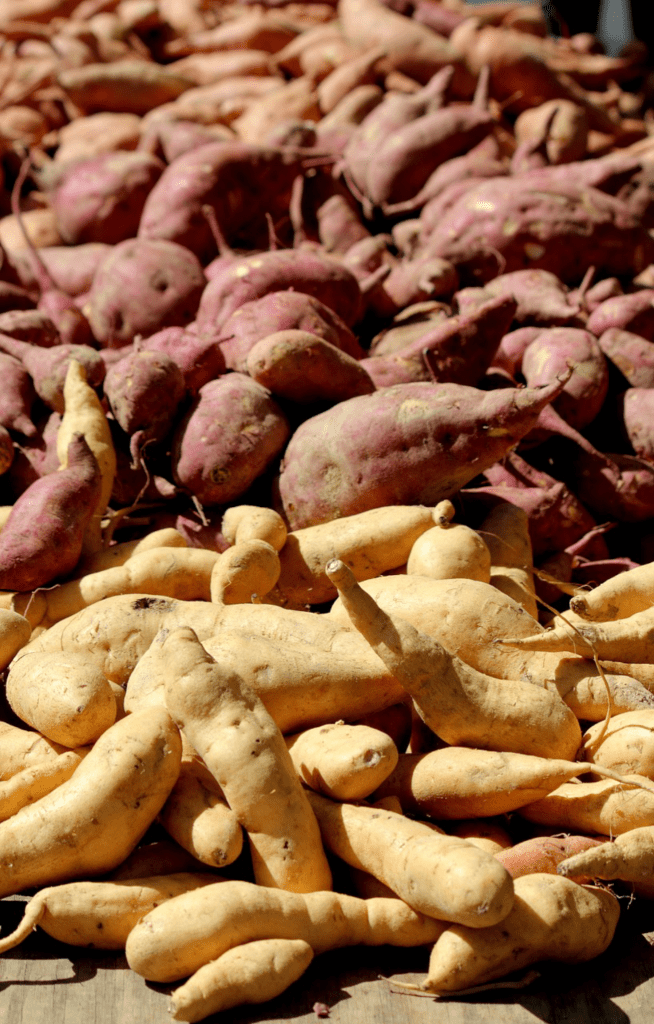
Upon my Mom’s urging to further read & research, I also learned that Surry County hosts a Sonker Trail and a festival each October. Surry County even has a classic Sweet Potato Sonker with a creamy/milky type “dip” which is a finishing feature of the Sweet Potato Sonker.
Y’all still might be thinking …really, ISa Cobbler the same thing as Sonker??? In my opinion, these two are very “close first cousins.” Honestly, I simply prefer to use Sonker to describe my fruit-filled deep dish pies. My food memories linger there.
According to the research articles I have read, the term “Sonker”, was derived from a Scottish word meaning straw saddle. The Sonker experts tell us that they suspect that cooks used the analogy of the crust likeness of the fruit-filled pie to compare it to the Scottish word.
North Carolina settlers have connections to Scotland via the Great Wagon Road
Also, the Sonker experts believe that the term Sonker originated in Surry and Wilkes Counties. I suspect that if you aren’t a “native” to these two geographic areas NOR your parents, you may not know the term Sonker.
My husband had no clue what Sonker was all about, even though he has lived in Wilkes his entire life BUT his parents were not “natives” of Wilkes. Cobbler is the term he definitely prefers to use for the fruit-filled dessert.
My sister, on the other hand, a Wilkes County native, who now lives out of state, is teaching her young daughter to make Sonker… thereby keeping the legacy of our mom’s recipe going strong! That definitely made my heart smile.
I would suspect the term Sonker is locale specific. My grandparents lived in both Surry & Wilkes Counties during their lifetime. So I believe they were well connected to the locale and it was reflective within their vocabulary and local food choices. Sonker was definitely a sweet part of summer during my younger years. I hope to continue my Sonker Summers by experimenting with my mom’s classic recipe and just simply enjoying the “fruits of my labor”.
Your personal preference of the term Sonker or Cobbler could be ingrained into your vocabulary mindset. But cobbler makers & lovers, I hope that you will add Sonker into your vocabulary AND into your food palate. Let’s keep our local food history alive and growing! Go experience Sonker this Summer.
Mom’s basic recipe for Sonker :
Ingredients & Utensils
-Square baking pan (this recipe is easily doubled or even cut in half in order to accommodate the number of people you wish to feed, for my 8-9 inch square baker I use 3/4 cup instead of full recipe)
-1 stick melted butter
-1 cup self rising flour
-1 cup milk – (I added a dash of vanilla to mine but it is not necessary)
-1 cup sugar
-Fruit (fresh, frozen, or canned… use what you have on hand)
Fresh blueberries, a staple of Sonker Summertime
Directions:
1. Preheat oven to 350.
2. Melt butter in baking pan.
3. Mix together milk, sugar, flour and dash of vanilla (if desired) into bowl as butter melts.
4. Once butter is melted, pour milk /flour/sugar mixture over the butter into pan. Do not stir!
5. Add fruit on top of milk/flour/sugar mixture. The breading will disperse throughout the Sonker as it bakes. Sprinkle extra sugar on top of fruit for extra sweetness if desired.
Canned fruit typically has plenty of extra sweetness, so skip the sugar topping if desired.
6. Bake until crust is golden brown.
7. Note: You may want to let your Sonker cool down for 10 minutes before eating. No one wants to get burned eating a hot Sonker.
8. Sonker is goes well with vanilla ice cream, enjoy y’all.
I believe y’all can find a few different versions of Sonker recipes online… this one is definitely nostalgic to me and my favorite one.
Living the "hardwarelife", join us in our journey of hardware store ownership





























 The Hardware Life - A wife's journey into the hardware business